
“For me, they said I was selfish.”
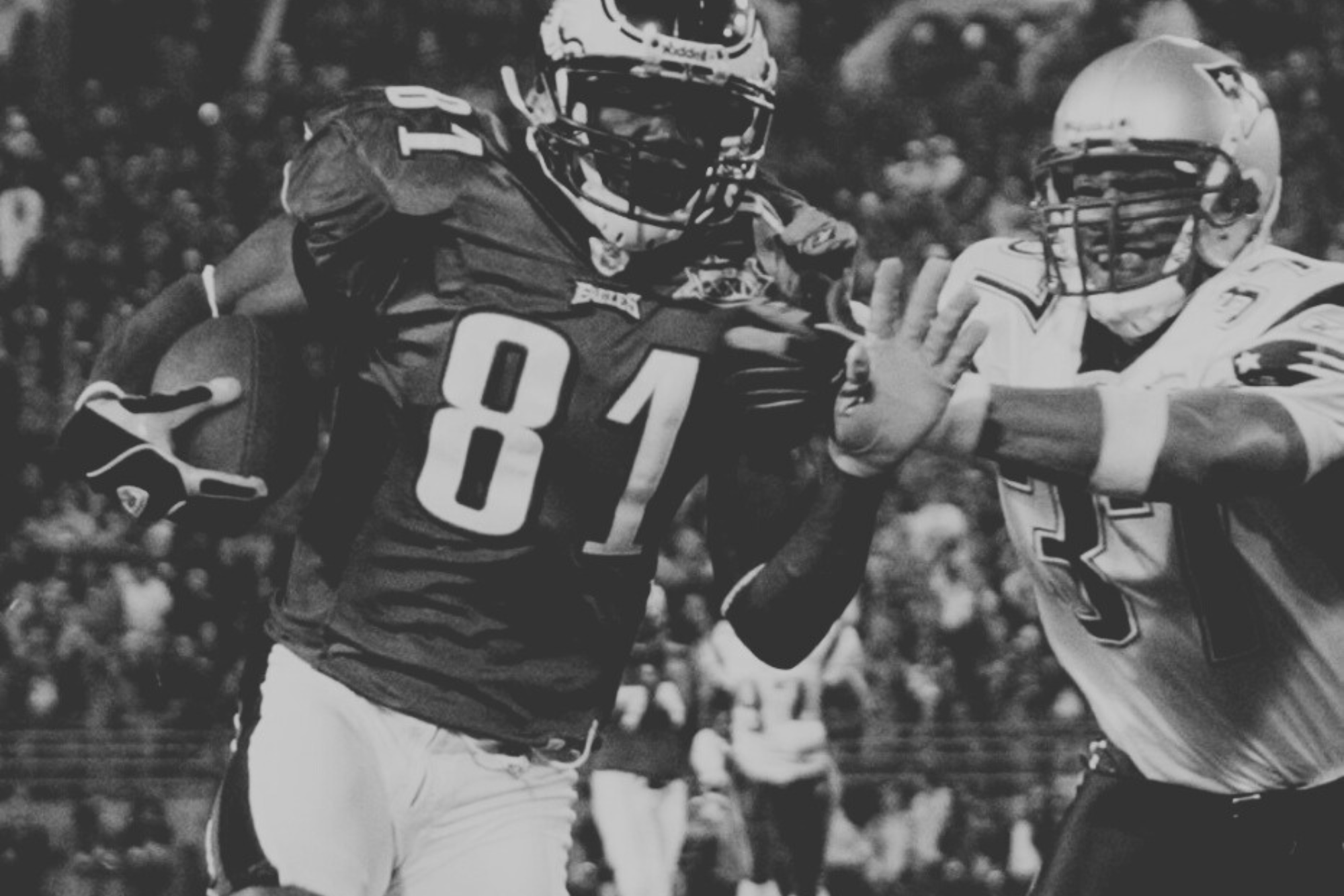
On February 6, 2005, Terrell Owens, a former Chattanooga Moc, took the field in Super Bowl XXXIX for the Philadelphia Eagles, overcoming what was widely considered a season-ending injury and producing one of the greatest performances by a wide receiver in Super Bowl history.
The Injury
On December 19, 2004, Owens suffered a severely sprained ankle and a fractured fibula after being tackled by Dallas Cowboys safety Roy Williams using the now-infamous horse-collar technique. The injury was devastating. Surgery was required, including the insertion of screws into his leg, and initial medical evaluations suggested Owens would miss the remainder of the season with only a remote chance of returning if Philadelphia reached the Super Bowl.
The impact of that play went beyond Owens himself. Similar injuries caused by horse-collar tackles around the league led the NFL to ban the maneuver the following season.
Super Bowl XXXIX
After the Eagles defeated the Atlanta Falcons in the NFC Championship Game, against medical advice, Owens committed to playing in Super Bowl XXXIX. With the help of his personal trainer, James “Buddy” Primm, Owens used advanced recovery methods, including microcurrent therapy and hyperbaric chamber treatments, to accelerate his rehabilitation.
The result was one of the most courageous performances in Super Bowl history, though it was not universally recognized as such at the time. Owens went on to have a dominant yet polarizing 16-season NFL career, with much of the controversy stemming from his own larger‑than‑life persona.
Owens started the game and caught nine passes for 122 yards, repeatedly exploiting the New England Patriots’ secondary despite playing through visible pain. Although the Eagles ultimately lost, his performance stood out as the offensive catalyst for Philadelphia.
Had the Eagles overcome their four turnovers and secured the victory, many observers believed Owens would have been the Super Bowl MVP — an almost unthinkable outcome just weeks after surgery.
RelatedPosts

“Selfish” or Warrior?
After the game, Owens addressed the contrasting narratives surrounding injured stars.
He noted that if another player, such as Brett Favre, had played through a similar injury, the media might have labeled him “a warrior,” while Owens was instead criticized as “selfish.”
That response mirrored Owens’ entire professional career — dominant, headline-grabbing, and often polarizing. Over 16 NFL seasons from 1996 to 2010, Owens established himself as one of the most productive wide receivers in league history, while also remaining a lightning rod for controversy.
Chattanooga:
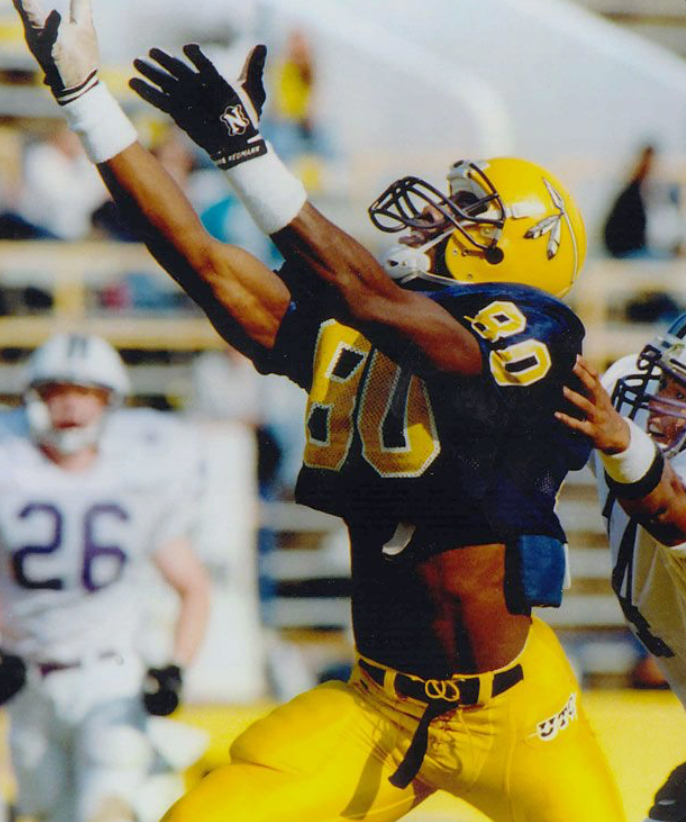
Before Super Bowl heroics and Hall of Fame debates, Owens was a lightly built receiver at Chattanooga. Standing 6 feet tall but weighing just 177 pounds upon arrival, questions surrounded whether he could endure the physical demands of Division I football — let alone while also competing in basketball and track.
Owens’ freshman year was quiet, but his development accelerated quickly.
- As a sophomore, he recorded 38 receptions for 724 yards and eight touchdowns
- As a junior, he added 34 receptions for 357 yards and three touchdowns
- During his senior season, increased defensive attention limited him statistically, but underscored the respect he had earned across the NCAA
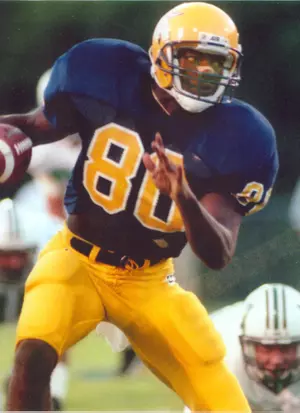
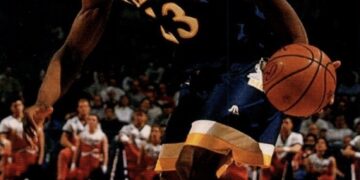
Across his Chattanooga career from 1992 to 1995, Owens compiled 144 receptions for 2,320 yards and 19 touchdowns, ranking second in school history in both receptions and receiving yardage. He also caught at least one pass in 20 consecutive games between 1994 and 1995 and earned two letters in basketball, highlighting his all-around athleticism.
From Moc to NFL Star
Owens’ SoCon success translated to the professional ranks when he was selected in the third round of the 1996 NFL Draft by the San Francisco 49ers. From there, his path led to multiple All-Pro seasons, iconic performances, and ultimately a Hall of Fame career.
Yet among all his accomplishments, February 6, 2005 remains one of the most defining moments — a night when a Southern Conference alum delivered a historic professional performance under the brightest lights.
The Point After
Today in SoCon History February 6, 2005 reminds us that the Southern Conference’s impact stretches far beyond its campuses. Terrell Owens’ Super Bowl XXXIX performance stands as a testament to resilience, preparation, and competitive will — qualities forged during his days at Chattanooga and carried into the NFL.