


The Citadel quietly opened one of the most remarkable baseball seasons ever produced by a SoCon program.
The 1990 season arrived without fanfare or lofty expectations for The Citadel Bulldogs. Instead of a celebratory opening act, it began on the road against Armstrong State, the No. 1 ranked team in Division II. On that February afternoon, the Bulldogs edged out a 5–4 victory, a result that seemed modest at the time but would later stand as the first step in a truly historic journey.

That victory carried deeper meaning because of everything surrounding the program at the time. Just five months earlier, Hurricane Hugo, a devastating Category 4 storm, had torn through Charleston, killing 27 people across South Carolina and leaving widespread destruction behind. The Citadel’s campus was heavily impacted, and its baseball facilities were among those hit hardest, reshaping the team’s path long before the first pitch was thrown.
A Program Tested Before the First Pitch
College Park, the Bulldogs’ home field, was essentially unusable for much of the preseason. With no proper field available, the team practiced wherever space could be found. Parking lots doubled as practice areas, and routine drills became improvised exercises more reminiscent of sandlot baseball than Division I preparation.
When Opening Day finally arrived, The Citadel had only regained limited access to its field a week earlier. Even then, the stadium remained a construction zone. Dugouts were incomplete and roofless, and the sounds of rebuilding echoed throughout games. Yet within those imperfect conditions, the Bulldogs found something steady and grounding.
Coming off Hurricane Hugo, The Citadel Bulldogs found solace on the diamond.
Modest Expectations, Steady Leadership
From a competitive standpoint, little suggested a historic season was coming. The Bulldogs had finished fifth in the Southern Conference in 1989 and were picked sixth in the 1990 preseason poll. They were respected, but far from favored.
At the helm was Chal Port, in his 26th season as head coach. He guided a team that was not only trying to win games, but also navigating the emotional aftermath of a natural disaster that had reshaped daily life in Charleston.

The First Swing of a Record Season
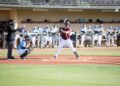
The February 9 victory featured an early glimpse of a star performance that would define the season. Anthony Jenkins hit the first of what would become a school-record 16 home runs in the opening game. It was a powerful opening statement from a player about to author one of the finest offensive seasons in program history.

Jenkins earned All-America honors after an outstanding season at the plate, batting .397 with 16 doubles, 16 home runs, and 68 RBIs. His steady production and power presence provided a reliable foundation for the lineup all year.
The Ripple Effects of a Special Team
That 1990 roster left a legacy that extended far beyond the season itself. Three players from the team would go on to become Division I head coaches, a rare distinction that speaks to the baseball acumen and leadership cultivated within the program.
Dan McDonnell became head coach at Louisville in 2007 and built the Cardinals into a national power. Chris Lemonis took over at Indiana in 2015 before leading Mississippi State to a national championship. Tony Skole served as head coach at East Tennessee State from 2000 to 2017 and later returned to The Citadel as head coach in 2018.
Their collective impact underscores how foundational that season was, not just for The Citadel, but for college baseball as a whole.
A Singular Place in College Baseball History
To this day, The Citadel remains the only military academy to reach the College World Series, a distinction that elevates the significance of the 1990 Bulldogs. That achievement traces directly back to moments like the opening win at Armstrong State, when belief was still forming and nothing was guaranteed.
Armstrong State, located in Savannah, Georgia, was itself a respected program. The Division II Pirates were a charter member of the Peach Belt Conference in 1990. Though Armstrong’s athletic program was eventually discontinued following its consolidation with Georgia Southern University in 2017, its role in opening The Citadel’s historic season remains part of the narrative.
The Point After
Looking back, February 9, 1990 represents more than an opening-day victory. It marks the moment when adversity began to transform into achievement for The Citadel Bulldogs. Amid rebuilding, uncertainty, and modest expectations, a team found clarity between the lines. In the context of Today in SoCon history, that afternoon in Savannah remains a powerful example of how enduring legacies often begin quietly, with one win and an unshakable belief.

