


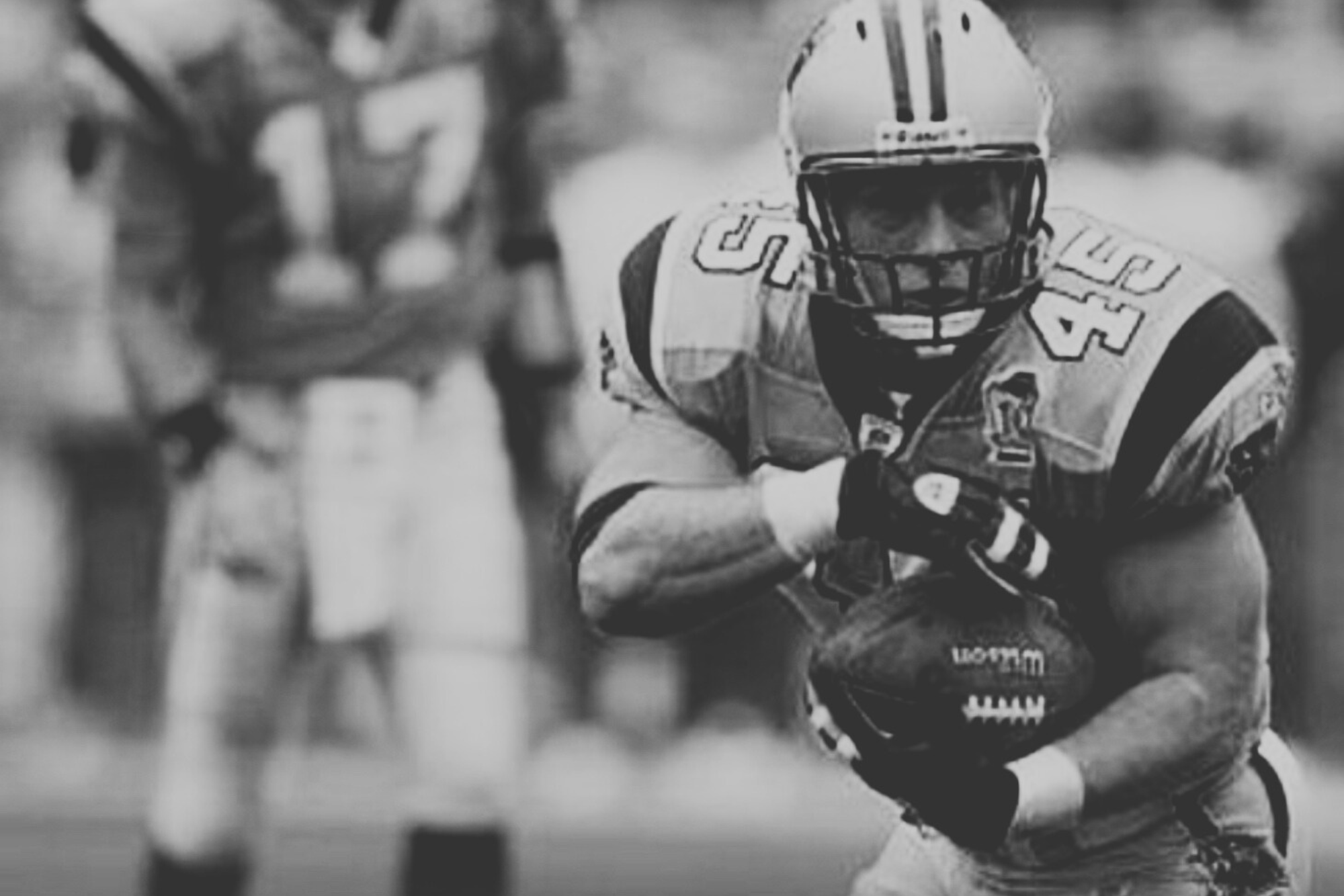

Western Carolina’s Brad Hoover: An Undrafted Free Agent Who Earned a Starting Role on Football’s Biggest Stage.
Brad Hoover’s path to the Super Bowl was never conventional. Undrafted out of Western Carolina, Hoover entered the NFL without guarantees, relying instead on toughness, versatility, and relentless work ethic. Those traits ultimately made him a fixture in the Carolina Panthers’ backfield from 2000 to 2009 and made him a fan favorite.
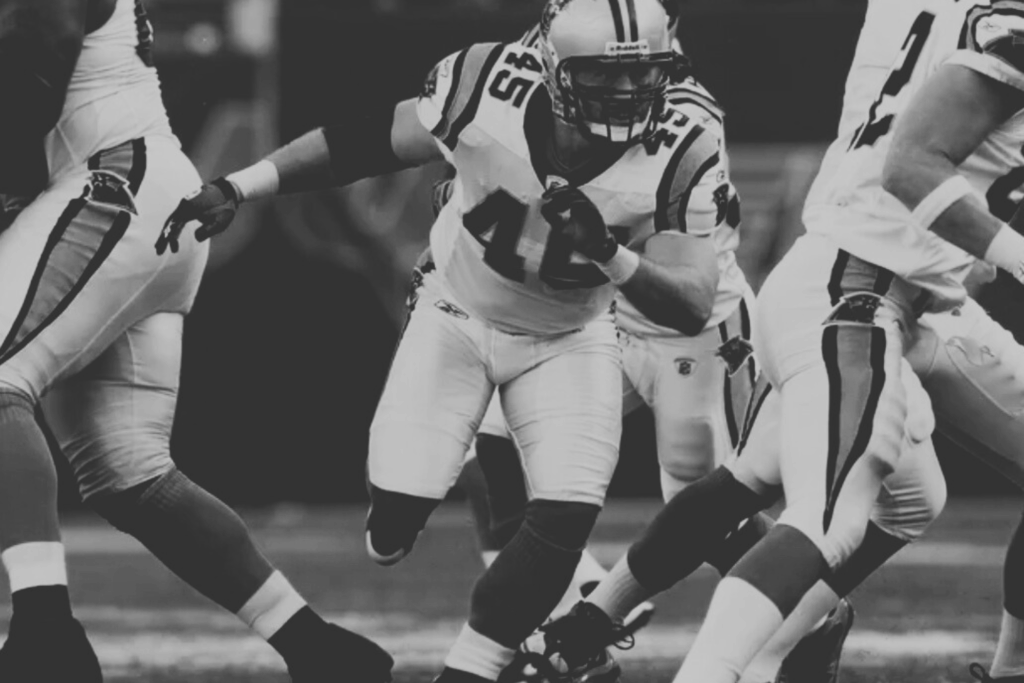
Super Bowl XXXVIII marked the first Super Bowl appearance in Panthers franchise history, and Hoover was entrusted with a starting role at fullback. While the box score rarely captures a fullback’s impact, Hoover’s contributions were foundational to Carolina’s offensive success throughout the 2003 season and into their Super Bowl run.
From Catamount Star to NFL Mainstay
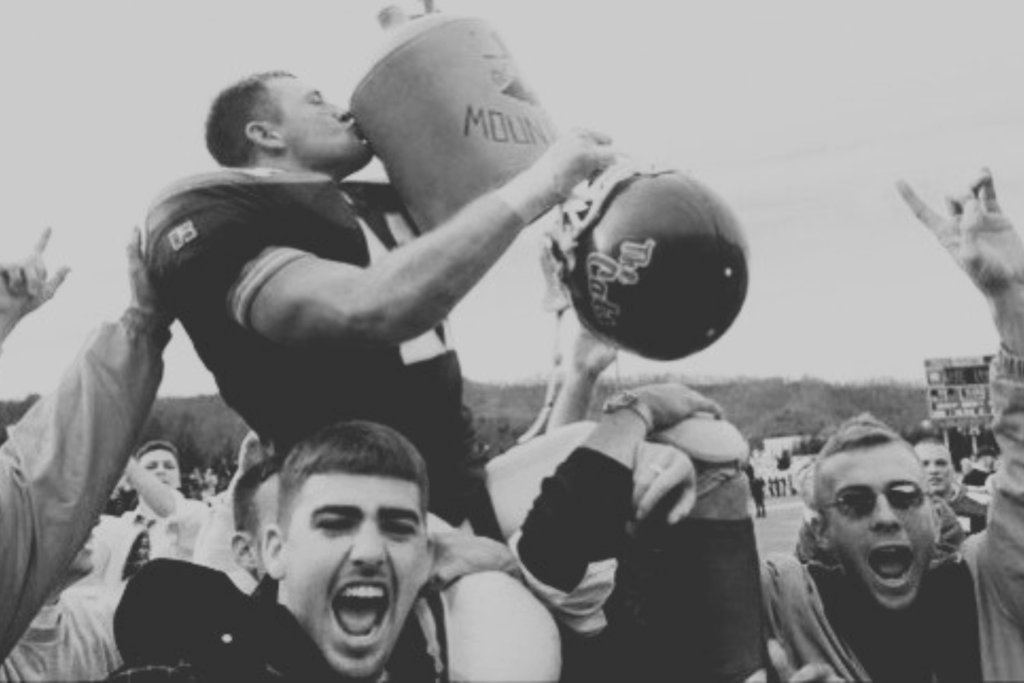
Before becoming one of the most recognizable role players in Panthers history, Hoover was already a standout at Western Carolina. Over four seasons, he emerged as one of the most heralded players in Catamount football history. Hoover rushed for 3,616 career yards, the second-most in school history, and set a Western Carolina single-season record with 1,663 rushing yards in 1998.
The 2003 Season:
By the 2003 season, Hoover had become the Panthers’ starting fullback, and Carolina leaned heavily on its running game with Hoover’s role as the primary blocker for a powerful backfield that included Stephen Davis and DeShaun Foster.
That season, Davis rushed for 1,444 yards while Foster added 429 more. Hoover’s responsibilities extended beyond lead blocking. He served as a key pass protector and safety valve in the passing game.
Statistically, his season was modest by design. Hoover carried the ball just six times for 21 yards and caught 12 passes for 72 yards and a touchdown. Yet his value was immeasurable. He did the unglamorous work that allowed the Panthers’ offense to function efficiently, embodying the hard-nosed style that defined the team’s identity.
Super Bowl XXXVIII:
Super Bowl XXXVIII, played on February 1, 2004, at Reliant Stadium in Houston, Texas, is remembered as one of the most entertaining championship games in NFL history. The New England Patriots defeated the Carolina Panthers 32–29 in a dramatic contest decided by a last-second field goal.




The game featured a fourth quarter explosion, with both teams trading scores in rapid succession. Patriots quarterback Tom Brady delivered a masterful performance, earning Super Bowl MVP honors after setting a record with 32 completions. The game was ultimately decided when Adam Vinatieri drilled a 41-yard field goal with just four seconds remaining.
While the outcome favored New England, Hoover’s presence in the Panthers’ starting lineup underscored his remarkable rise. From undrafted free agent to Super Bowl starter, his journey mirrored the perseverance that defines many Southern Conference success stories.
Super Bowl XXXVIII is also remembered for its controversial halftime show featuring Janet Jackson and Justin Timberlake, an off-field moment that became one of the most discussed incidents in Super Bowl history.
Lasting Impact
Hoover spent nearly a decade with the Panthers, carving out a career built on consistency and toughness. Known for his reliability and willingness to embrace any role, he became a fan favorite and a respected veteran presence in the locker room.
After retiring from professional football, Hoover returned to North Carolina and transitioned into coaching high school football. In that role, he continued to influence the game by mentoring young athletes, sharing lessons learned from his journey through college football, the NFL, and the Super Bowl stage.
The Point After
Brad Hoover’s story stands as an awesome chapter in Southern Conference history. From record-setting performances at Western Carolina to starting at fullback in Super Bowl XXXVIII, his career exemplifies what is possible for SoCon athletes who went on to do great things in the pros.

On February 1, 2004, Hoover represented not only the Carolina Panthers, but also the enduring strength of the Southern Conference.

