


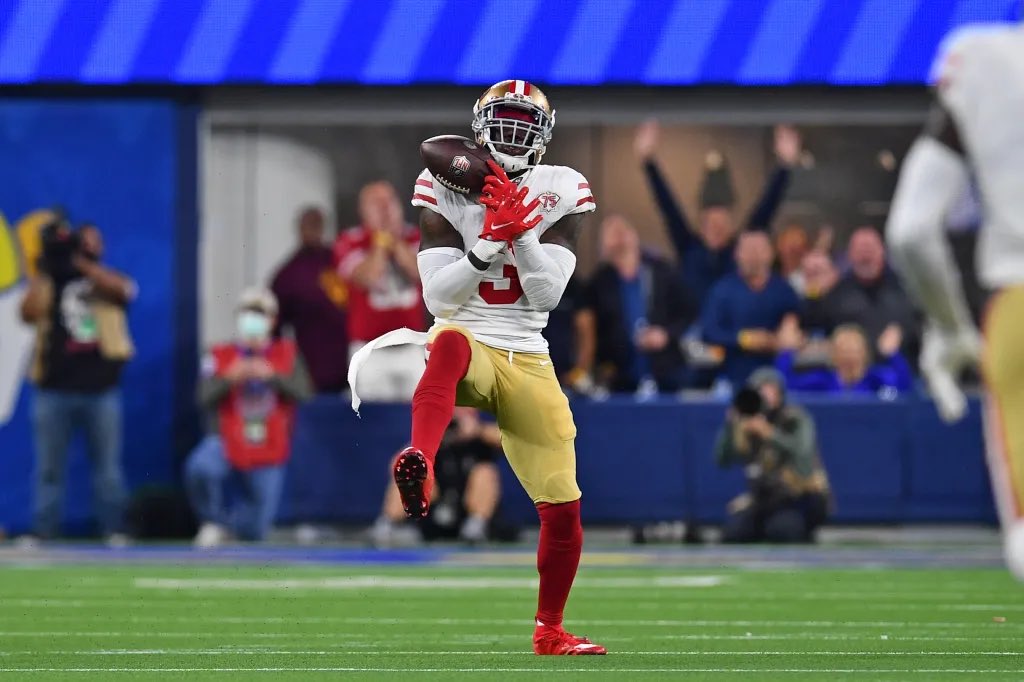

As part of our daily look back at moments that shaped the Southern Conference’s place in the sports world, this entry revisits a play that still echoes through highlight reels and group chats, living rent-free in the heads of 49ers fans. Equal parts heartbreak, accountability, and dark football humor, it remains one of the most talked‑about moments involving a former SoCon star.
Samford Roots and the Road to the NFL Draft
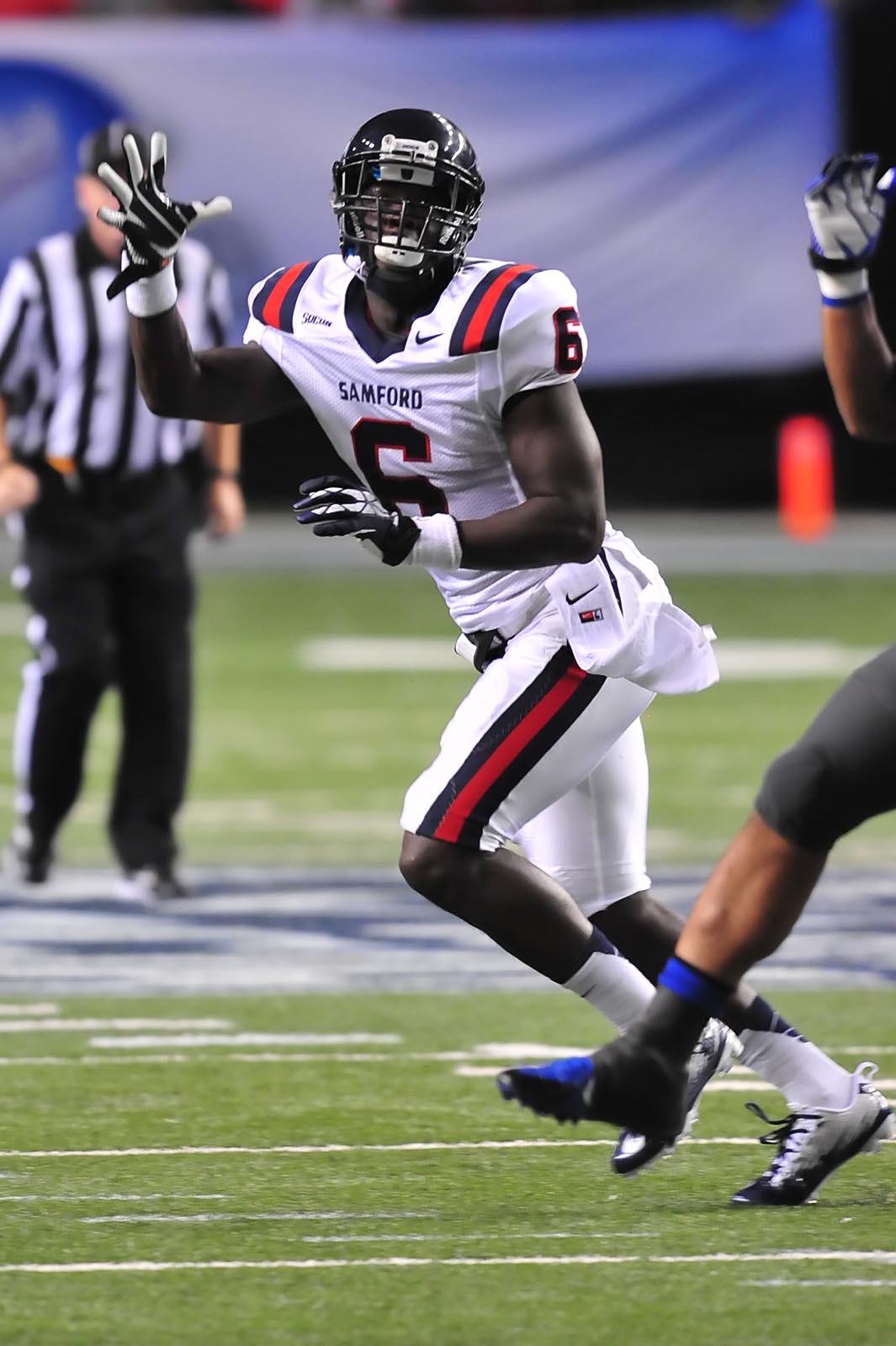
Before his name became synonymous with one of the NFL’s most painful “what ifs,” Jaquiski Tartt was a model Southern Conference success story.
Tartt arrived at Samford in 2010 from Mobile, Alabama, and redshirted his freshman season, patiently waiting his turn (remember when college athletes did that?). By 2011, he was on the field. By 2012, he was entrenched as a starter. From that point on, Tartt emerged as one of the most reliable defensive backs in the conference, finishing his career with 277 tackles and six interceptions.
The accolades followed quickly. Tartt was a three-time Associated Press All-American and a three-time first-team All-SoCon selection. His 2012 season stood out, as he led Samford with 94 tackles and four interceptions, combining downhill physicality with coverage instincts. In 2013, he helped lead the Bulldogs to a share of the Southern Conference championship and an appearance in the FCS Playoffs.
That résumé translated directly to the NFL. In 2015, the San Francisco 49ers selected Tartt in the second round with the 46th overall pick, making him the highest NFL Draft pick in Samford history. For the SoCon, it was validation. For Tartt, it was the beginning of a seven-year run as a legitimate NFL safety.
The Infamous Dropped Pick That Changed Everything
January 30, 2022, is where this story takes its turn.
The San Francisco 49ers entered the fourth quarter of the NFC Championship Game with a three-point lead over the Los Angeles Rams and a clear path to the Super Bowl. With just under 10 minutes remaining, Rams quarterback Matthew Stafford launched a deep pass over the middle from his own 15-yard line.
The pass was ill-advised. Intended for Van Jefferson, it landed directly in the waiting arms of Jaquiski Tartt. No receiver nearby. No defender contesting. Just open field, a likely interception, and a probable Super Bowl ticket.




Instead, the ball bounced off Tartt’s shoulder and onto the turf.
The Jaquiski Tartt dropped interception instantly became one of the most replayed moments in postseason history. In the stands, 49ers fans initially celebrated, only to be told moments later that he had dropped it. That emotional whiplash perfectly mirrored what happened on the field.
The Rams capitalized. Stafford led an eight-play, 63-yard drive that ended in a game-tying field goal. San Francisco never regained momentum, allowing 112 yards on the Rams’ final two scoring drives and eventually falling 20–17 at SoFi Stadium.
One dropped pass didn’t lose the game on its own, but it cracked the door. The Rams walked straight through it.
Handling Adversity When the World Is Watching
Plenty of athletes disappear after moments like that. Tartt did the opposite.
Immediately after the game, he owned it. No deflection. No excuses. Tartt openly admitted that the play was one he had envisioned all week, the exact moment players dream about. When the moment arrived, he didn’t make it.
“The moment of truth showed up and I didn’t step up,” Tartt said, acknowledging both the opportunity and the failure.
He doubled down publicly, tweeting that he deserved the criticism and that the moment would not define him as a person or a player. Later, Tartt reflected that he received far more love than hate, choosing to focus on support rather than trolls.
Teammates backed him as well. Safety Jimmie Ward reminded everyone that the loss came down to many plays, not just one. Still, Tartt stood at the podium on the worst day of his professional life and answered every question.
That response turned the moment into something larger than football. The dropped interception became a case study in accountability, resilience, and how to face adversity when millions of people have already made up their minds.
A Solid Pro, One Play, and a Jarring Ending
Here’s where the story becomes truly uncomfortable.
Jaquiski Tartt never played another NFL game after that night.
From 2015 to 2021, Tartt was a steady, productive professional. He played in 80 games for the 49ers, starting 64 of them. He totaled 367 tackles, including 265 solo stops, intercepted four passes, and defended 18 others. He wasn’t flashy, but he was trusted.
After the season, San Francisco let him walk in free agency. Tartt signed a one-year deal with the Philadelphia Eagles, only to be released during training camp. No other team called. No comeback tour followed.
Given his résumé, it remains surprising that none of the other 31 NFL teams took a chance, even as a veteran depth piece. Age and the lingering memory of the dropped interception may have played a role, even though teammates and coaches stressed that the NFC Championship loss was about far more than one play.
Still, football history is rarely fair, and perception often outweighs context.
The Point After
January 30, 2022, remains etched into Southern Conference and NFL history alike. Jaquiski Tartt’s journey from Samford standout to second-round pick to dependable NFL starter deserves to be remembered in full—not just through a single replay.
The Jaquiski Tartt dropped interception didn’t erase a career, but it undeniably reshaped how that career ended. It stands as a reminder that in football, the margin between legacy and heartbreak can be as thin as a ball glancing off a shoulder—and sometimes, that’s all it takes.

